
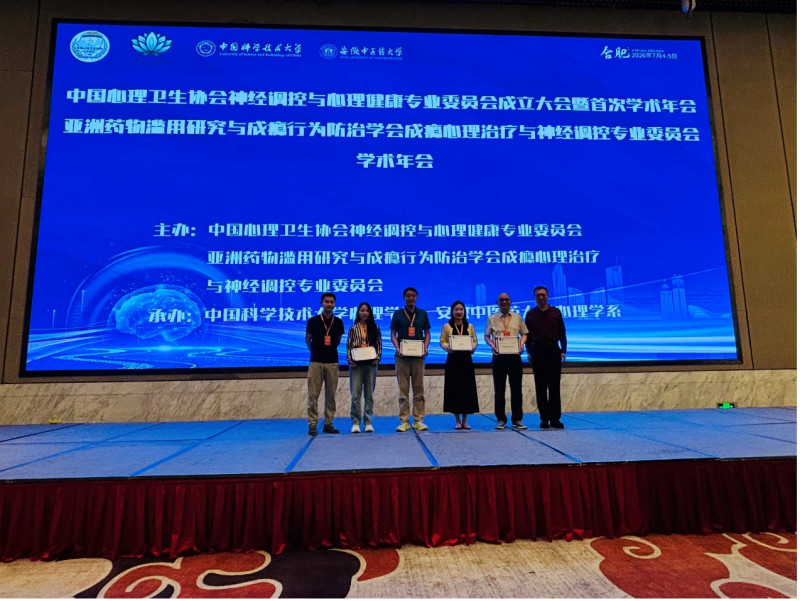
From July 4–5, 2026, the 2026 Annual Academic Conference of the Committee on Addiction Psychotherapy and Neuromodulation of the Asian Society for Research on Drug Abuse and Prevention of Addictive Behaviors was successfully held in Hefei, Anhui Province. The conference was jointly organized by the Committee on Addiction Psychotherapy and Neuromodulation of the Asian Society for Research on Drug Abuse and Prevention of Addictive Behaviors and the Committee on Neuromodulation and Mental Health of the Chinese Mental Health Association. It was hosted by the Department of Psychology at the University of Science and Technology of China and the Department of Psychology at Anhui University of Chinese Medicine.
.jpg)
The image shows a scene from the graduate student forum.
The conference brought together experts and scholars from universities, research institutions, and medical organizations across China, representing diverse fields including neuroscience, psychiatry, psychology, and biomedical engineering. Through a series of high-level academic exchanges focusing on neuromodulation, mental health, addiction intervention, and advances in brain science, the conference established an interdisciplinary platform connecting basic research, clinical practice, and the development of skilled researchers.
The academic program was structured into multiple sessions. On the afternoon of July 4, a graduate student forum was held as a prelude to the main conference. Young researchers presented their work on topics including neuromodulation, psychiatric intervention, and addiction science, demonstrating the innovation and vitality of emerging scholars and initiating academic discussions ahead of the main sessions.
.jpg)
Remarks delivered by conference guests.
On July 5, the core academic program officially commenced. Academicians including Academician Lu Lin, Academician Wang Yizheng, Professor Wang Gang, President of the Chinese Mental Health Association, Executive Deputy Secretary Jiang Yi of the University of Science and Technology of China, and Vice President Wei Hua of Anhui University of Chinese Medicine, along with leading experts and university representatives, attended the opening ceremony.
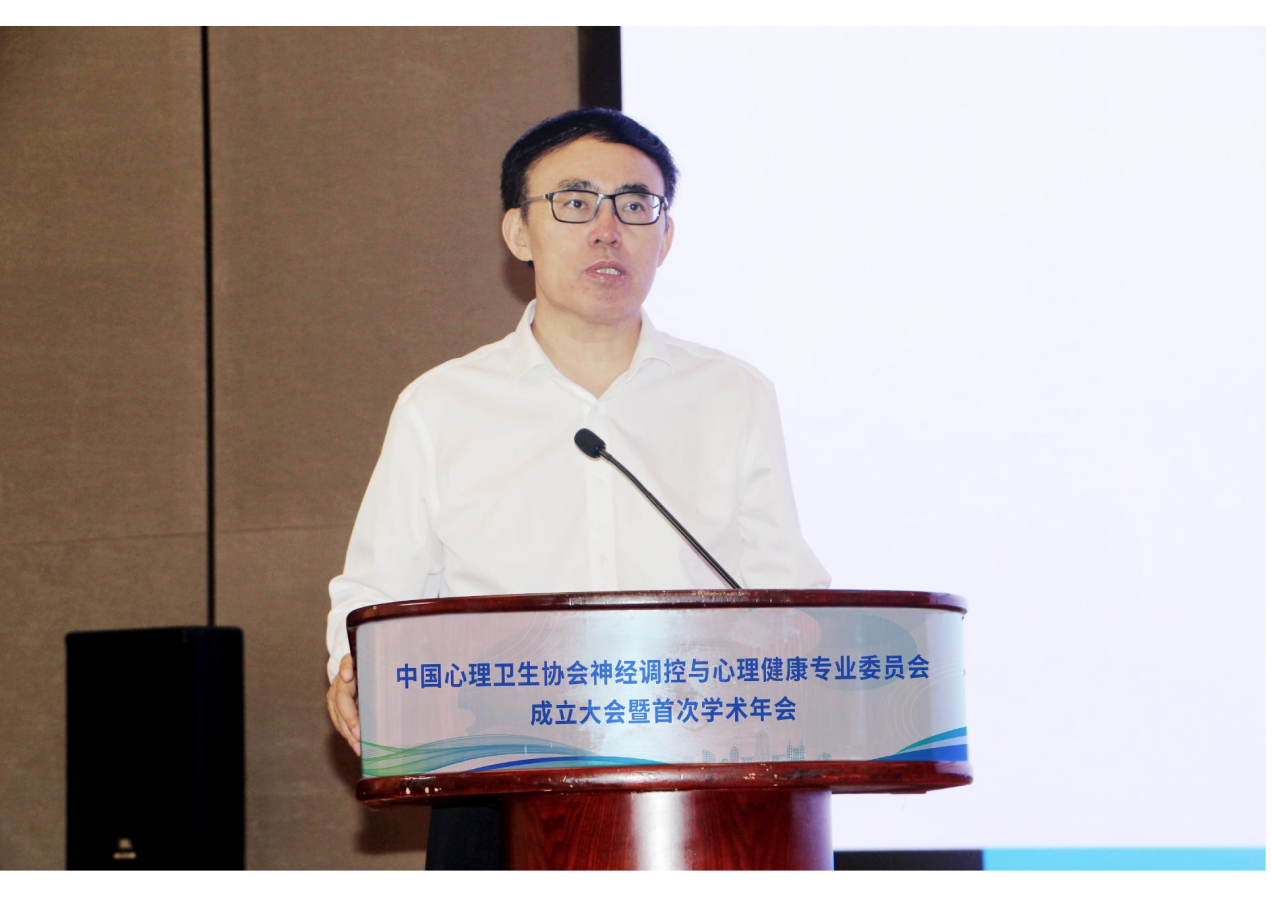
Academician Lu Lin delivering a keynote speech
Following the opening ceremony, a series of keynote presentations were delivered. Academician Lu Lin presented a keynote lecture titled “Development and Prospects of Medical Brain–Computer Interfaces.” Researcher Hao Hongwei from Tsinghua University discussed implanted brain–computer interface technologies and their clinical applications. Professor Xie Wei from DongNan University shared cutting-edge findings from animal studies on hippocampal stimulation for improving cognitive impairment. Subsequently, experts from multiple disciplines participated in a roundtable discussion on “Practical Pathways for the Translation of Neuromodulation Technologies,” addressing challenges in transferring laboratory innovations into clinical applications and exploring collaborative pathways among academia, industry, and healthcare systems.
The conference also featured multiple parallel thematic sessions. Among them, the Addiction and Psychiatric Disorders Session, sponsored by the Committee on Addiction Psychotherapy and Neuromodulation, served as one of the conference’s featured highlights. The session focused on key topics related to addiction disorders and neuromodulation interventions for psychiatric comorbidities. Experts delivered presentations and engaged in in-depth discussions on addiction neuroscience, emerging electromagnetic stimulation technologies, and clinical approaches for treating addiction comorbid with depression and insomnia. The session fostered active interaction and meaningful academic exchange.
To encourage young researchers to advance interdisciplinary work in addiction science, the Committee established the Best Graduate Student Paper Award during this session to recognize outstanding research presentations by the scholars.
.jpg)
Additional parallel forums on depression intervention, brain–computer interfaces, and invasive neuromodulation provided comprehensive coverage of emerging topics in neuromodulation and mental health. Cross-disciplinary discussions generated numerous innovative research ideas with potential for clinical translation.
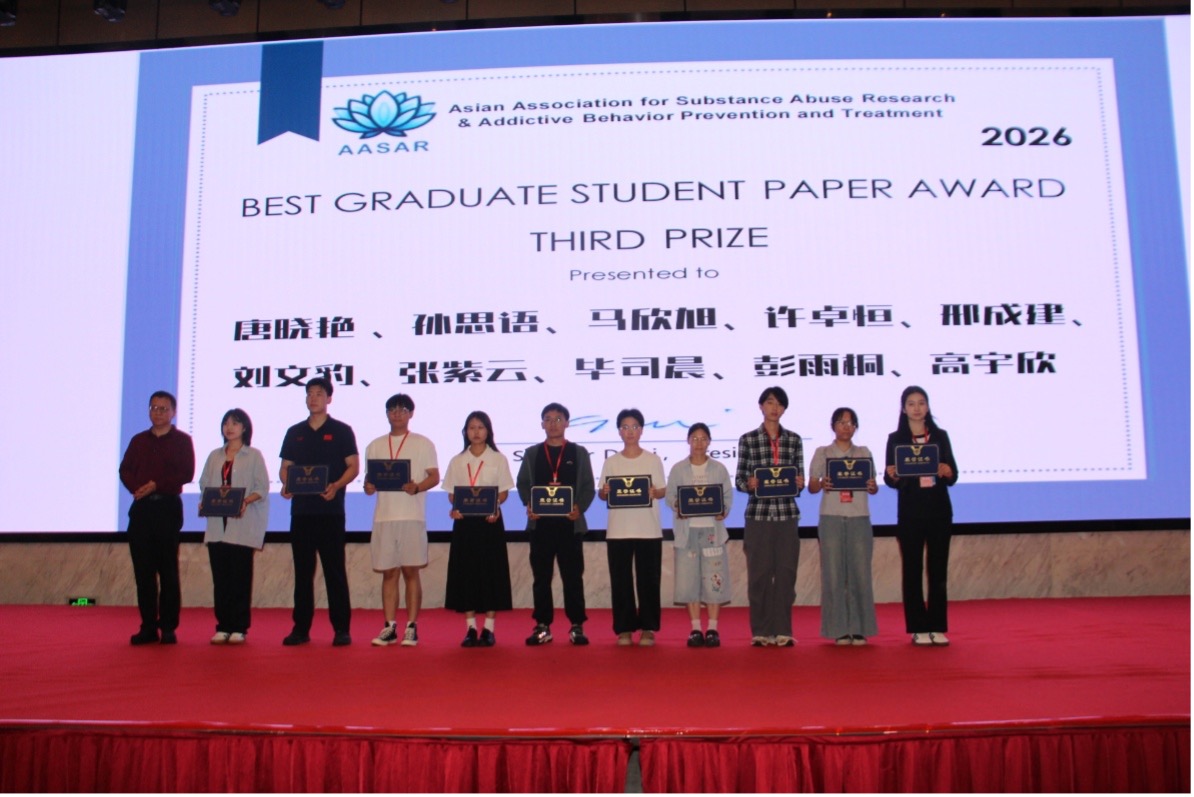
The closing ceremony was chaired by Secretary-General Lü Xinyou of the Committee on Addiction Psychotherapy and Neuromodulation. Professor Zhang Xiaochu, Chair of the Committee, presented awards to outstanding graduate students receiving the Best Graduate Student Paper Award, recognizing their innovative contributions to the intersection of addiction research and neuromodulation. The award also aimed to encourage young researchers to continue advancing addiction prevention and treatment science.
Academician Wang Yizheng delivered the concluding remarks, highly commending the conference’s substantial academic achievements and expressing strong expectations for the future development of neuromodulation technologies in the prevention and treatment of addiction and psychiatric disorders.
Aligned with national priorities in brain science initiatives and the Healthy China strategy, this annual conference strengthened interdisciplinary collaboration among addiction psychotherapy, neuromodulation, and psychiatry. As a co-organizer of the conference, the Committee on Addiction Psychotherapy and Neuromodulation of the Asian Society for Research on Drug Abuse and Prevention of Addictive Behaviors will continue to develop a long-term academic exchange platform in the field of addiction. The Committee is committed to promoting the standardization and advancement of neuromodulation-based addiction interventions, supporting young talent development, facilitating cutting-edge scientific discussions and clinical translation, and advancing research, public education, and community-based services in addiction prevention and treatment. Through scientific innovation, the Committee aims to contribute to the improvement of population mental health and comprehensive addiction prevention and intervention efforts.